Blog Archive

Monday, December 10, 2018

Manzana Jesuitica

La Manzana Jesuítica

The Jesuits established the Jesuit Manzana in the city of Cordoba in 1599. The Manzana consisted of the church, quarters for the Jesuits, and the Colegio to educate males of wealthy families in South America. On an adjacent block they built slave quarters and warehouses for the supplies to support the activities of Jesuit Manzana.

La Iglesia de la Compañía de Jesús


Construction of the church began in 1641 and was finished 36 years later. Since timber of sufficient length and quality were not available to build a conventional ceiling, the architect constructed the ceiling in the form of an inverted ship. Guarani craftsman in the border region of Paraguay and Argentina constructed the altar and reredo. These furnishings were shipped in pieces by ox cart to Cordoba, a journey of over 600 miles. 

Jesuit Residency


The Residency is not open to the public, but a pedestrian walkway goes by the exterior of the Residency.  Pope Fransis spent two years here during his exile from Buenos Aires.

Colegio Maximo / National University of Cordoba


The Colegio Maxjmo, founded in 1610, became the foundation of the future Nacional University of Cordoba, one of the oldest universities in the Americas. It houses the Archivo Jesuítico collection of 2,800 books, the oldest dating back to the thirteenth century. This collection provides a snapshot of the existing areas of study during the early days of the Colegio. The collection is preserved by the University Library, and 500 items of the the collection are now accessible by the public.

Cordoba Provincial Flag 


Cordoba Province included the Jesuit sun on their flag in recognition of the education and economic contribution of the Jesuits.

Jesuit Estancias


The Jesuits established a unique system of six Jesuit Estancias throughout the province to produce the food, wine, cattle, goods and economic support for the Jesuit Manzana. Each estancia consisted of up to 10,000 ha of land, 2-3 Jesuits to administer the estancia, and several hundred slave and indigenous people to perform the labor.

Five of the estancias are now museums and declared UNESCO World Heritage sites in 2000.

A description and photos of the Estancias can be accessed below:


Wednesday, March 7, 2018

Laguna de Mar Chiquita


Mar Chiquita, located 250 km east of La Falda, is one of Argentina’s treasures of biodiversity. It is frequented by more than 300 species of birds, 35 reptiles, 16 amphibians, and numerous species of mammals. The extensive wetlands and river estuaries attract 66% of Argentina’s migratory and shore birds. It is also the winter haven for many North American birds. 


During the winter months, three of the six flamingo species frequent this area. Two of the flamingo species migrate from the Andean highlands. The third species, the Chilean flamingo, is a year-round resident. Over 300,000 Chilean flamingoes have been counted at Mar Chiquita.

In recognition of the ecological value of this lake, plans are underway to create a national park.  The 800,000 ha of salt water, estuaries and wetlands will make this Argentina’s largest national park. It is one of the most important sites in South America for the conservation of migrating birds.  


Three rivers empty into this lake which does not have an exit.  One of the rivers, Rio Suquia, flows through the city of Cordoba. La Falda and the Valle de Punilla are in the Rio Suquia watershed.  The water that drains from our kitchen sink may well flow into the Laguna de Mar Chiquita.

The Spanish explorers traveling from Lima, Peru, thought they had arrived at the Atlantic Ocean when they spotted Mar Chiquita.  They were searching for a transcontinental route, but needed to travel another 700 km to reach the east coast.

In the early 1900’s Argentine and European tourists began visiting Mar Chiquita for the therapeutic salt water, mud baths and sun. In the 1930’s, a wealthy family from Buenos Aires decided to spend the summer at Mar Chiquita. Their children were affected by asthma and psoriasis. Their positive health response to their time at the salt lake prompted the family to build the luxury Grand Hotel Vienna in the developing town of Miramar. The hotel opened in 1939 and two additional wings were added in subsequent years. The 150 room, five star hotel, was equipped with all the modern amenities of the time.  

The Grand Hotel Vienna 


The success of the Grand Hotel Vienna spurred the development of additional hotels, restaurants and shops to accommodate tourists. In the 1970’s the population of Miramar grew to 4500 and the town was home to 110 hotels. 


Grand Hotel Vienna flood damage 

Miramar's economic boom, however, was short-lived.  A weather cycle with increased rainfall, coupled with high rates of deforestation in the Mar Chiquita watershed, led to serious flooding.  The 10 m rise in the water level flooded most of the tourist infrastructure.  In the 1990’s the flooded buildings were dynamited and the rubble remains underwater.

The  water tower is the only remnant of the Cococabana casino

The town of Miramar experienced a renaissance in the late 1990’s, as it relocated further inland on higher ground.  A road and pedestrian walkway bordering the lake were constructed to serve as a dike to prevent future flooding.  Tourism is again thriving and Mar Chiquita is now on the path to becoming a national park. 


Additional Resource

Paintings of birds at Mar Chiquita by Jorge Warde can be accessed at his webpage:
aves acuaticas de la reserva mar chiquita

Tuesday, February 6, 2018

Reserva Provincial La Payunia


The visit of Cindy Cappelle, a friend from our Peace Corps days in Ecuador, prompted us to take a road trip to the southern region of Mendoza. One of the hostels we stayed in was an ECO Hostel on the outskirts of Malargüe. We enjoy hostels because they give us the flexibility of preparing our own meals in the communal kitchen. A downside is that hostels tend to cater to Argentines and younger travelers whose bedtime is much later than ours.


While in Malargüe, we took a 12-hour expedition to the Reserva Provincial La Payunia. The area of the reserve is a bit smaller than the state of Delaware. The reserve has over 800 volcanic cones, making it one of the world’s largest concentrations of volcanoes. There is an average of 10.6 volcanoes every 100 km2. The highest volcano reaches a height of 3680 meters.

The lava and volcanic ash form colorful landscapes.  Some areas contain large boulders ejected from volcanoes while other areas are covered with volcanic gravel and sand


The lava dammed a river and flooded a vast valley. Over time the water eroded the lava and drained the dam. The land is now used for cattle and crop production.


Wednesday, December 6, 2017

Fiesta de Santa Bárbara


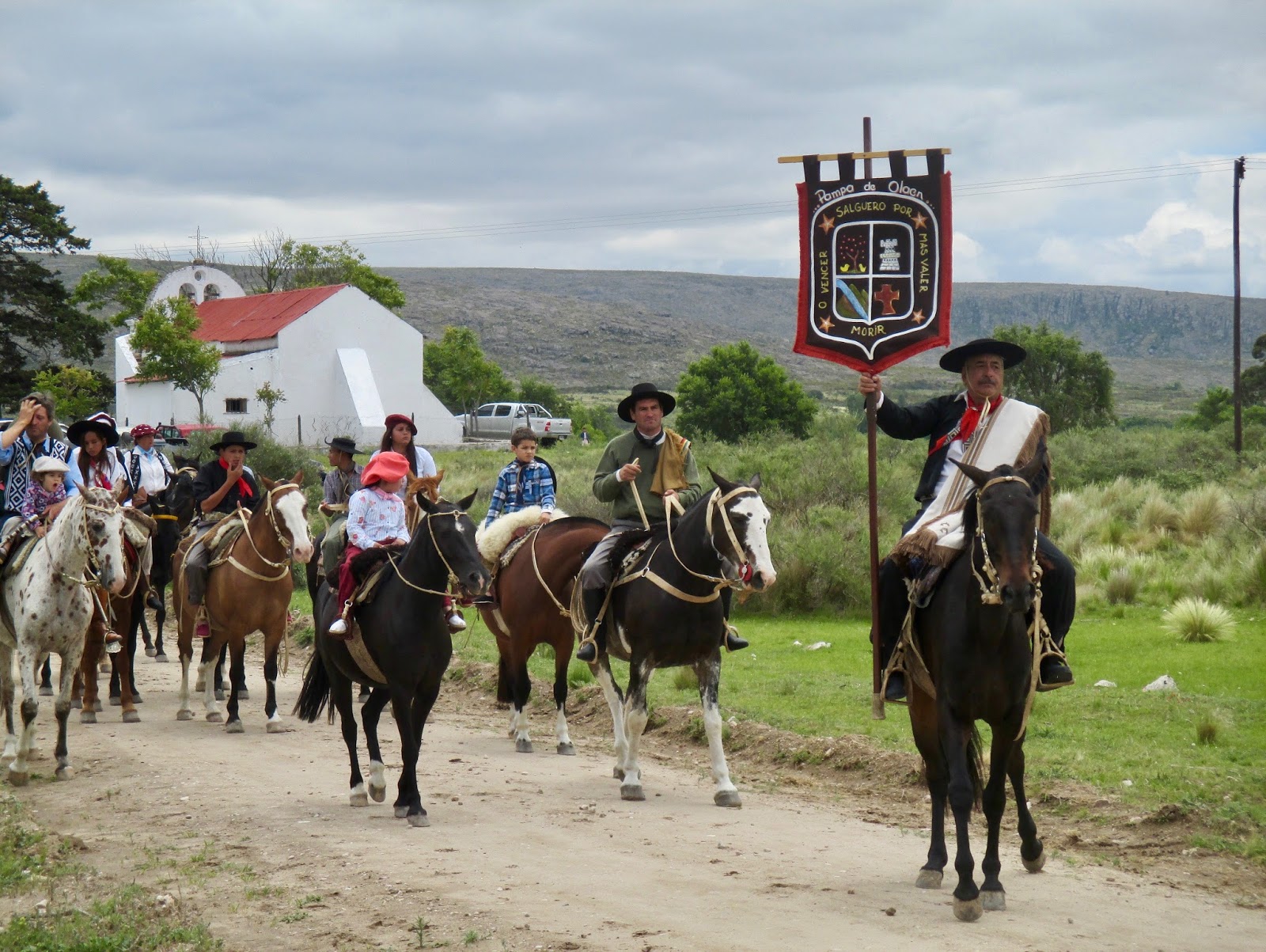
The sparely populated Pampa de Olaén is a picturesque setting for the annual pageantry of gauchos celebrating the Santa Bárbara Virgen. The simple red roofed chapel is one of the few signs of humans in this locality. The capilla was constructed in the mid 1700's on the vast San Roque estancia. The nearest town is La Falda, which is a distance of 12 miles from the capilla.

The Fiesta de Santa Bárbara is celebrated each year on December 4. Santa Bárbara is known as the protector from lightning. She is associated with the legend of the young lovers who lost their lives at the nearby Cascadas de Olaén. A brief history of the legend and the historic San Roque estancia can be found in my Pampa de Olaén blog post
.


View of the Santa Bárbara Capilla from the remnants of the estancia house.

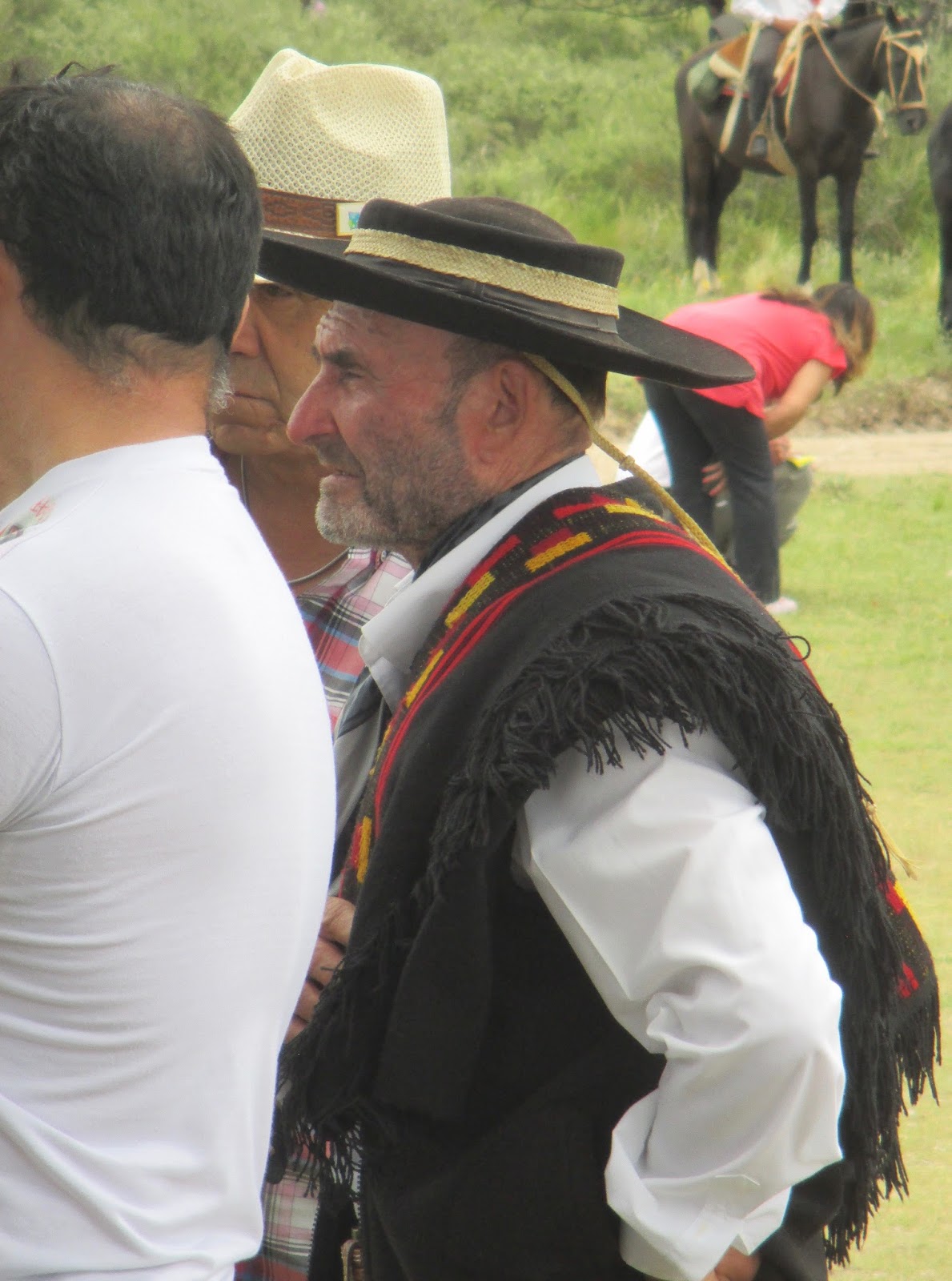
As we traveled the dirt road to the capilla, we passed groups of families and individuals on horseback in their gaucho attire. Most of the gauchos arrived over a period of two hours prior to the start of the ceremonies at noon.


The fiesta officially began with the raising of the flag, singing the national anthem, followed by mass. The service included baptism of three toddlers, a homily, communion, and blessing of the the gauchos and their horses.


Louisa's sister Susana, singing the national anthem.


After the blessing of the gauchos, a procession began with people on foot, followed by the gauchos on their horse.